What needs to change?
Describe the business problem in plain language. A clearer service explanation calls for different work from helping existing customers find support. Choose an objective you can actually examine.
Digital marketing / Find your signal
Connect the questions behind your business with the channels your audience uses. Explore practical reading across search, social media and websites, starting with one clear objective.
Explore the marketing toolkitA resource for better-informed decisions.
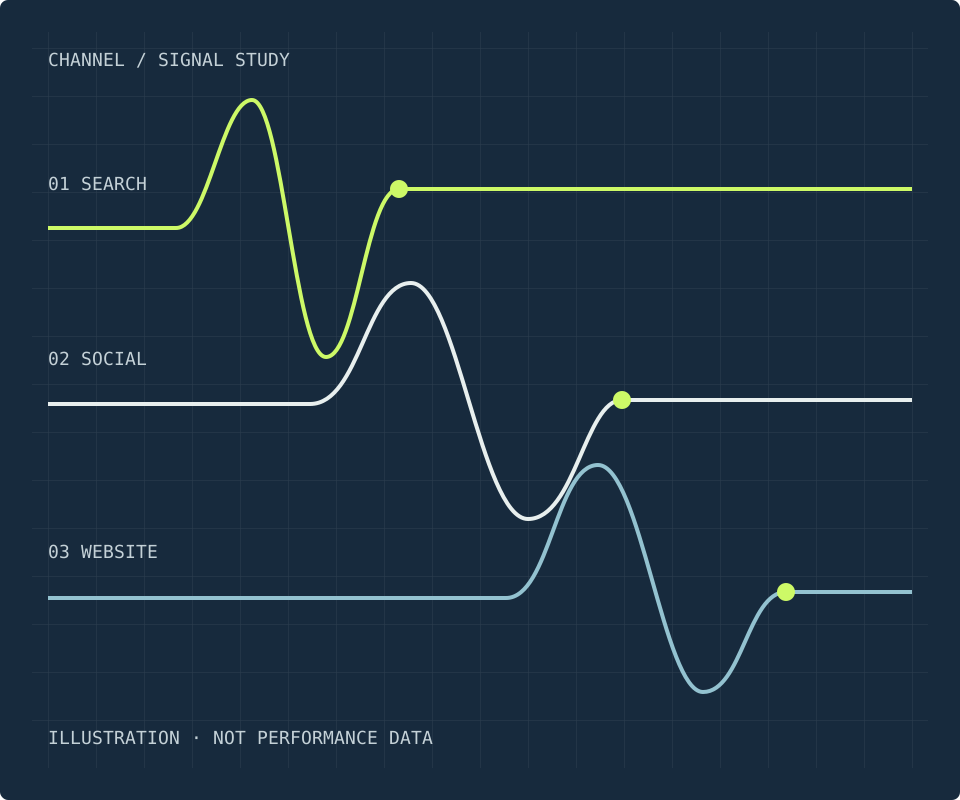
01 / Set the frequency
Before choosing a platform, write a short brief. Four decisions can make the next conversation more productive and help you avoid treating every channel as a separate project.
Describe the business problem in plain language. A clearer service explanation calls for different work from helping existing customers find support. Choose an objective you can actually examine.
Identify the people and situations that matter. Record the questions they ask, the language they use and the information they need before taking a next step.
Make the message specific. Explain the offer, its limitations and the next action, then remove any claim that you cannot support with reliable information.
Match the content to a channel and a moment. A detailed explanation may belong on a website, while a shorter social post can introduce the same question.
02 / Connect the channels
Search begins with intent. Build pages around real questions, use descriptive titles and keep related information connected. Useful SEO work considers whether a person can understand the answer after arriving, alongside how the page can be discovered.
Explore SEO resources ↗SEARCH
Intent → Relevant answer
Social media is a place to listen as well as publish. Choose topics your audience can recognize, adapt the format to the channel and plan who will respond. A maintainable publishing rhythm is more useful than a calendar filled without a purpose.
Read about social media ↗SOCIAL
Attention → Conversation
A website connects discovery with a decision. Organize pages around visitor needs, make navigation predictable and ensure essential details are readable on smaller screens. Test forms and links as part of the experience, and keep the destination consistent with the promise that brought someone there.
Browse website design topics ↗WEBSITE
Understanding → Action
03 / Read the evidence
A measurement brief explains what you want to learn, where the information comes from and what the numbers mean. Separate activity from outcomes, check that tracking works and note changes that could affect a comparison. An isolated figure cannot explain the whole customer journey.
Use the guide to eight marketing metrics as a discussion starter. When assessing published examples, the case study archive offers another reading route: examine the method and context before applying an idea to your own work.
Prepare better questions for an SEO agency ↗04 / Common questions
Digital marketing is the use of online channels to connect an offer with an audience. It includes search, websites, social media, email and paid distribution. The useful starting point is a customer question: what does someone need to understand before choosing a business, product or service?
Choose a channel by matching audience behavior with your immediate objective. Search can help people already looking for an answer; social content can introduce an idea through conversation. Consider what you can maintain consistently and what evidence would help you decide whether the approach is useful.
SEO and website design meet in the experience of finding and using a page. Clear structure, descriptive headings, useful copy and accessible navigation help visitors understand the content. Design also shapes how easily someone can read, compare information and reach an appropriate next step on a phone.
A marketing brief should state the audience, the problem, the offer and the action you want to support. Add the channels you will use, the content you need, who will maintain it and how you will review evidence. Keep assumptions visible so they can be checked rather than repeated as facts.
Review measurements that relate to the question you are trying to answer. Reach describes exposure, visits describe activity, and completed actions can describe a later step. Check definitions and tracking coverage before comparing figures. A change in a report needs context, including changes to content, seasonality and the audience.
Look for a clear starting situation, a described method and evidence that supports the conclusion. Check the period covered and whether the work resembles your own circumstances. A case study can suggest useful questions, but an example from another organization does not establish what your own results will be.
Update content when its information, offer or audience needs change. A regular review can uncover broken links, outdated descriptions and unclear next steps. Prioritize pages that support important decisions, and record meaningful revisions so later observations can be interpreted alongside the changes that actually took place.
Start with the channel that matches your current question, then read across related topics. The SEO, social media and website design sections provide focused routes into the material. Use the Blog for broader reading and the service overview to see how different activities can fit into a single plan.
Keep tuning your approach
Build your understanding one topic at a time. Browse the latest reading, revisit a channel or explore the wider archive when you need a different perspective.
Open the Blog